Facebook
Youtube
Instagram
As electric mobility gains momentum, understanding the nuances of
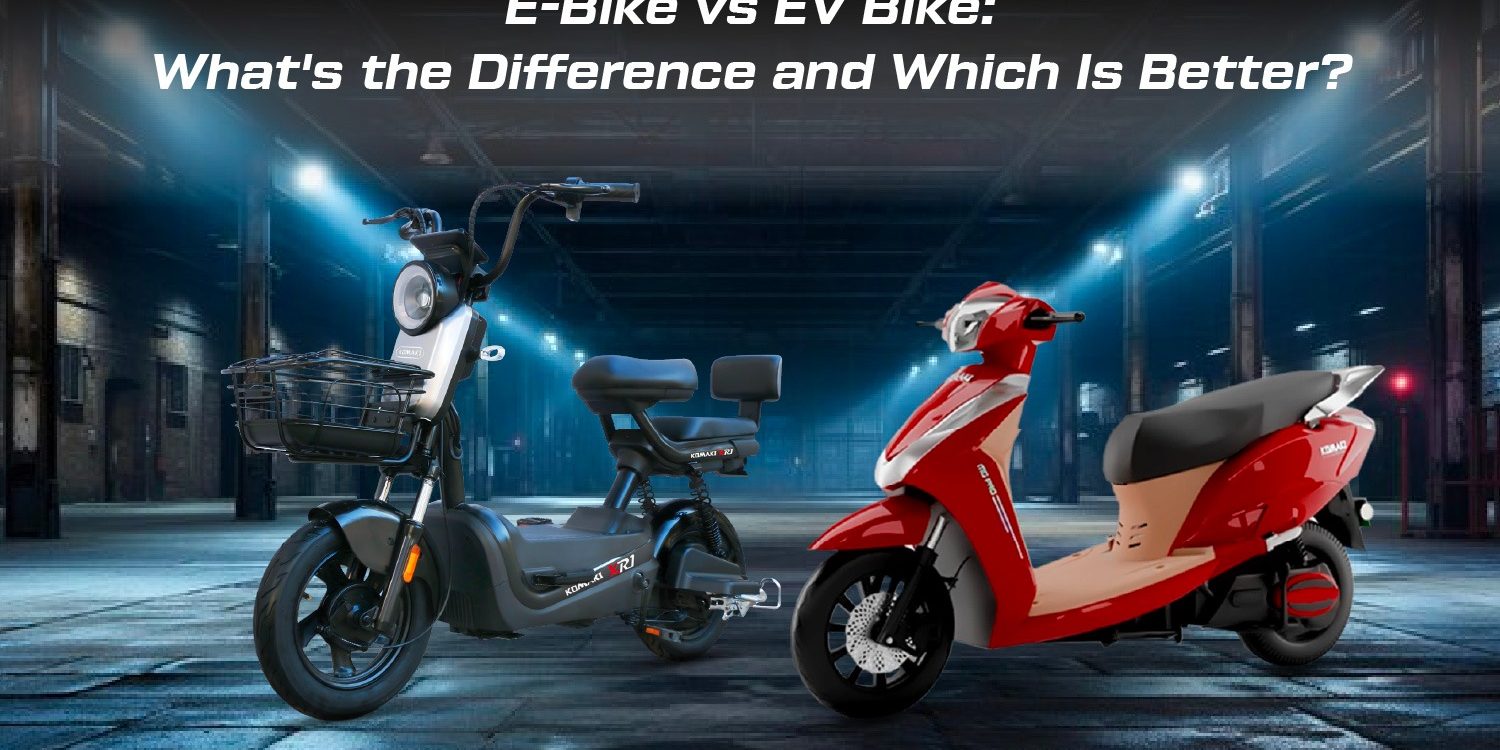
E-Bike vs EV Bike has become essential for Indian buyers. While both options offer eco-friendly commuting solutions, their features, costs, and functionalities vary significantly. Whether you’re considering an electric e-bike for leisure or an
EV bike for daily commuting, this blog will break down the differences to help you make an informed choice.
What Defines an E-Bike vs. an EV Bike?
The fundamental difference between e-bike and EV bike lies in their design and purpose.
-
E-Bike (Electric Bicycle)
Combines manual pedaling with electric assistance. It’s ideal for short commutes and fitness enthusiasts.
-
EV Bike (Electric Vehicle Bike)
Powered entirely by a motor, it’s suited for longer distances and high-speed urban commutes.
Both options contribute to green mobility, but choosing between E-bike and EV bike depends on your specific needs. This distinction forms the basis of the ongoing E-Bike vs EV Bike debate.
Key Features That Differentiate E-Bikes and EV Bikes
Speed and Range
-
Electric E-Bike
Speed ranges between 20–25 km/h, with a range of 40–60 km per charge.
-
EV Bikes in India
Speed can go up to 70–100 km/h, with a range of 70–120 km per charge.
Battery and Charging
-
E-bike And Ev Bike Use Lithium-ion Batteries, But Ev Bikes Require Higher Capacity Batteries, Costing Around ₹25,000–₹40,000.
-
Charging An Electric E-bike Takes About 2–3 Hours, While An Ev Bike May Take 4–5 Hours.
Cost
-
The Ev Bike Price Starts At ₹50,000 And Can Go Up To ₹1,50,000.
-
An Electric E-bike Costs Between ₹20,000 And ₹50,000.
These differences highlight why choosing between e-bike and EV bike requires careful consideration of your budget and usage patterns.
Cost Comparison: E-Bikes vs EV Bikes in India
When analyzing the difference between e-bike and EV bike, cost is a significant factor.
-
Initial Costs
E-bikes are more affordable, starting at ₹20,000. In contrast, EV bikes require a higher investment, with prices starting at ₹50,000.
-
Running Costs
The average cost per km for an electric e-bike is ₹0.10, while for EV bikes, it’s ₹0.25.
-
Maintenance
Maintenance costs for both are minimal, with annual expenses of ₹1,000–₹2,500 for e-bikes and ₹2,500–₹5,000 for EV bikes.

Considering these figures, choosing between e-bike and EV bike often depends on whether you prioritize affordability or performance.
Which Is Better for Daily Commuting: E-Bike or EV Bike?
For daily commuting, the E-Bike vs EV Bike debate boils down to convenience and distance.
-
If Your Commute Is Within 10–20 Km, An Electric E-bike Is Economical And Eco-friendly.
-
For Longer Commutes Exceeding 20 Km, Ev Bikes In India Provide The Range And Speed Needed For Urban Travel.
Additionally, the EV bike price reflects its superior performance and features, making it a practical choice for professionals and city dwellers.
The Environmental Impact of E-Bikes vs EV Bikes
Both e-bikes and EV bikes contribute to reducing pollution, but their environmental impact varies.
-
Electric bikes and pollution reduction
E-bikes produce no emissions, making them perfect for short trips and fitness activities.
-
EV bikes in India
While also emission-free, their larger batteries require more energy for production and recycling.

Regardless of the differences, both options support India’s green mobility goals, showcasing how the E-Bike vs EV Bike comparison is crucial for sustainability.
Performance and Battery Life: E-Bikes vs EV Bikes
Battery life and performance are key considerations when comparing e-bike and EV bike options.
-
Electric E-Bike
Lightweight and suitable for low-speed travel, with batteries lasting up to 3–5 years.
-
EV Bikes in India
Designed for high-speed performance and heavier loads, with batteries offering a lifespan of 4–7 years.
The difference between e-bike and EV bike becomes evident in their intended usage and battery longevity.
Why Choosing Between an E-Bike and EV Bike Depends on Your Needs?
The decision between an E-bike and EV bike depends on factors like commuting distance, budget, and lifestyle.
-
Fitness Enthusiasts May Prefer An Electric E-bike For Its Pedaling Assistance.
-
City Commuters Might Find Ev Bikes In India More Practical For Their Speed And Range.

Ultimately, the E-Bike vs EV Bike debate highlights the importance of understanding your specific needs before making a choice.
Frequently Asked Questions
Which Is More Affordable: E-Bike or EV Bike?E-bikes are more affordable, with prices starting at ₹20,000, compared to ₹50,000 for EV bikes.
Are E-Bikes Better for City Commutes Than EV Bikes?For short distances, e-bikes are better. For longer commutes, EV bikes are more efficient.
How Do E-Bikes and EV Bikes Differ in Terms of Charging and Battery Life?E-bikes charge faster (2–3 hours) but offer shorter ranges, while EV bikes take 4–5 hours to charge and provide extended ranges.
Key Takeaways
- The Difference Between E-bike And Ev Bike Lies In Their Speed, Range, And Functionality.
- Electric E-bikes Are Affordable, Eco-friendly, And Great For Fitness Enthusiasts.
- Ev Bikes In India Offer Superior Speed, Range, And Comfort For Longer Commutes.
- Choosing Between E-bike And Ev Bike Depends On Your Commuting Distance And Lifestyle Needs.
- Komaki Offers A Wide Range Of E-bikes And Ev Bikes To Suit Diverse Requirements.
When It Comes To E-bike Vs Ev Bike, Both Have Their Unique Advantages. While E-bikes Are Affordable And Fitness-friendly, Ev Bikes Excel In Speed And Range, Making Them Ideal For City Commutes. At Komaki, We Offer A Range Of Both Electric E-bikes And Ev Bikes In India, Ensuring There’s Something For Everyone. Whatever Your Needs, Komaki Is Committed To Providing Innovative, Eco-friendly Solutions For Modern Commuters.